Quantifying Risk at Enterprise Scale with Wolfram Consulting
Many organizations still evaluate operational risk using spreadsheets and qualitative estimates. Analysts assign ranges to possible outcomes, run calculations and distribute static reports. The result is a process that is difficult to repeat and difficult to share across teams.
A large global retailer faced this challenge. The company already had a risk-modeling algorithm, but the surrounding software environment made the system difficult to use and difficult to integrate with other enterprise tools.
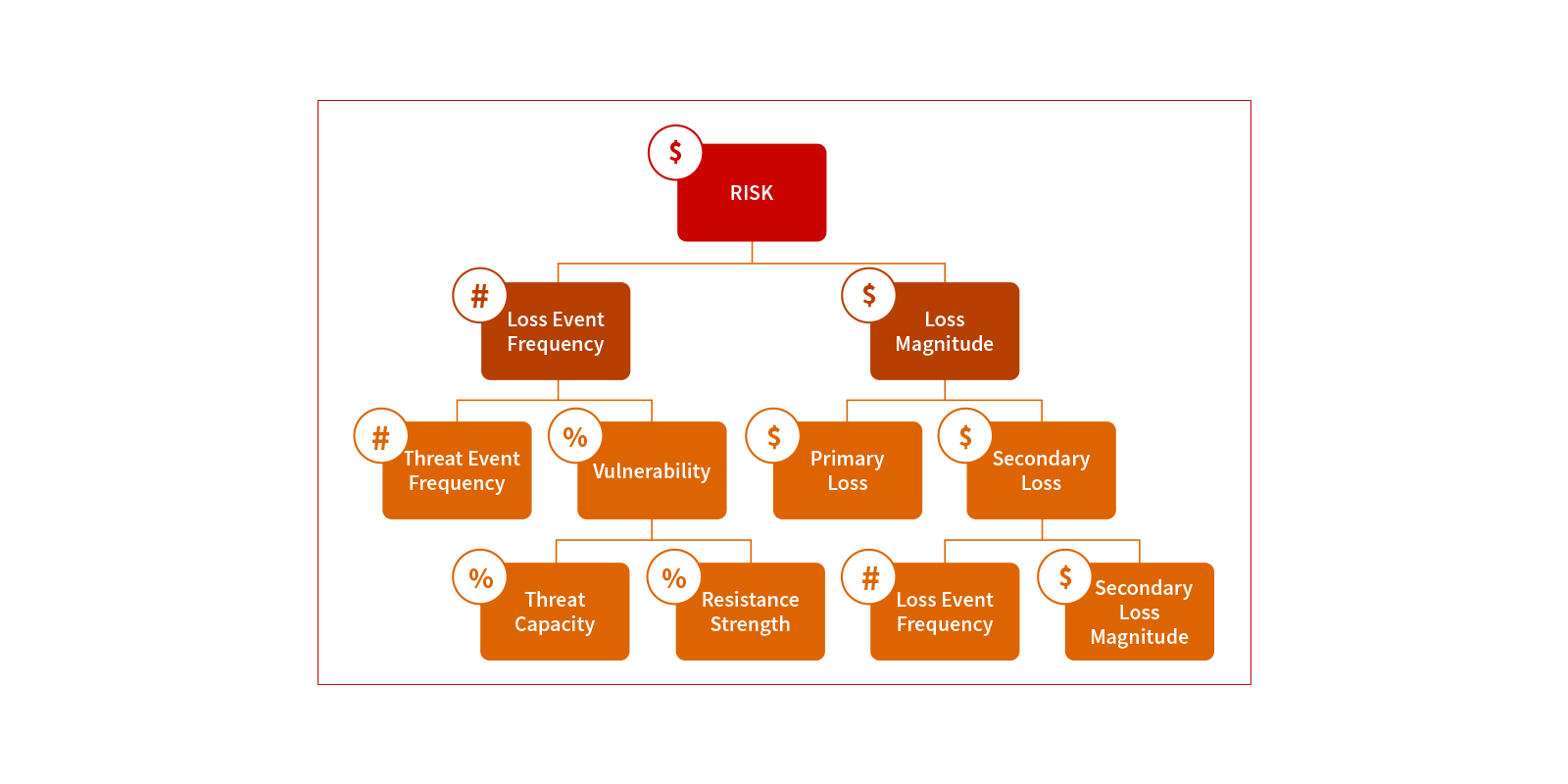
To address this problem, the organization partnered with Wolfram Consulting to build a platform using Wolfram Language for quantitative risk modeling based on Factor Analysis of Information Risk (FAIR). The system allows analysts to model risk scenarios and evaluate potential losses through Monte Carlo simulation within a collaborative enterprise environment.
From Isolated Models to Enterprise Risk Analysis
The retailer already had a quantitative risk-modeling approach in place. The underlying algorithm could estimate potential losses across different risk scenarios. However, the surrounding software environment limited how effectively the model could be used across the organization.
The existing platform was distributed across multiple systems and relied on a third-party drag-and-drop application that was difficult to extend. Calculations were performed in one environment using a high-level interpreted language, then the results had to be moved manually into another application for additional analysis. This fragmented workflow created additional overhead for analysts. At the same time, analysts typically created scenarios individually and shared results by exporting PDF reports, which limited collaboration across teams.
The new platform needed to:
- unify modeling and analysis within a shared environment
- support collaboration across teams and departments
- integrate with enterprise authentication systems
- connect simulation outputs with internal applications
The goal was not to redesign the underlying risk methodology but to create a computational platform that could support scenario modeling and simulation at enterprise scale.
Building the FAIR Platform with Wolfram
Wolfram Consulting developed a web-based risk-analysis platform designed for scenario modeling and probabilistic simulation. The system was built to support the retailer’s existing risk methodology while providing a more flexible and integrated software environment.
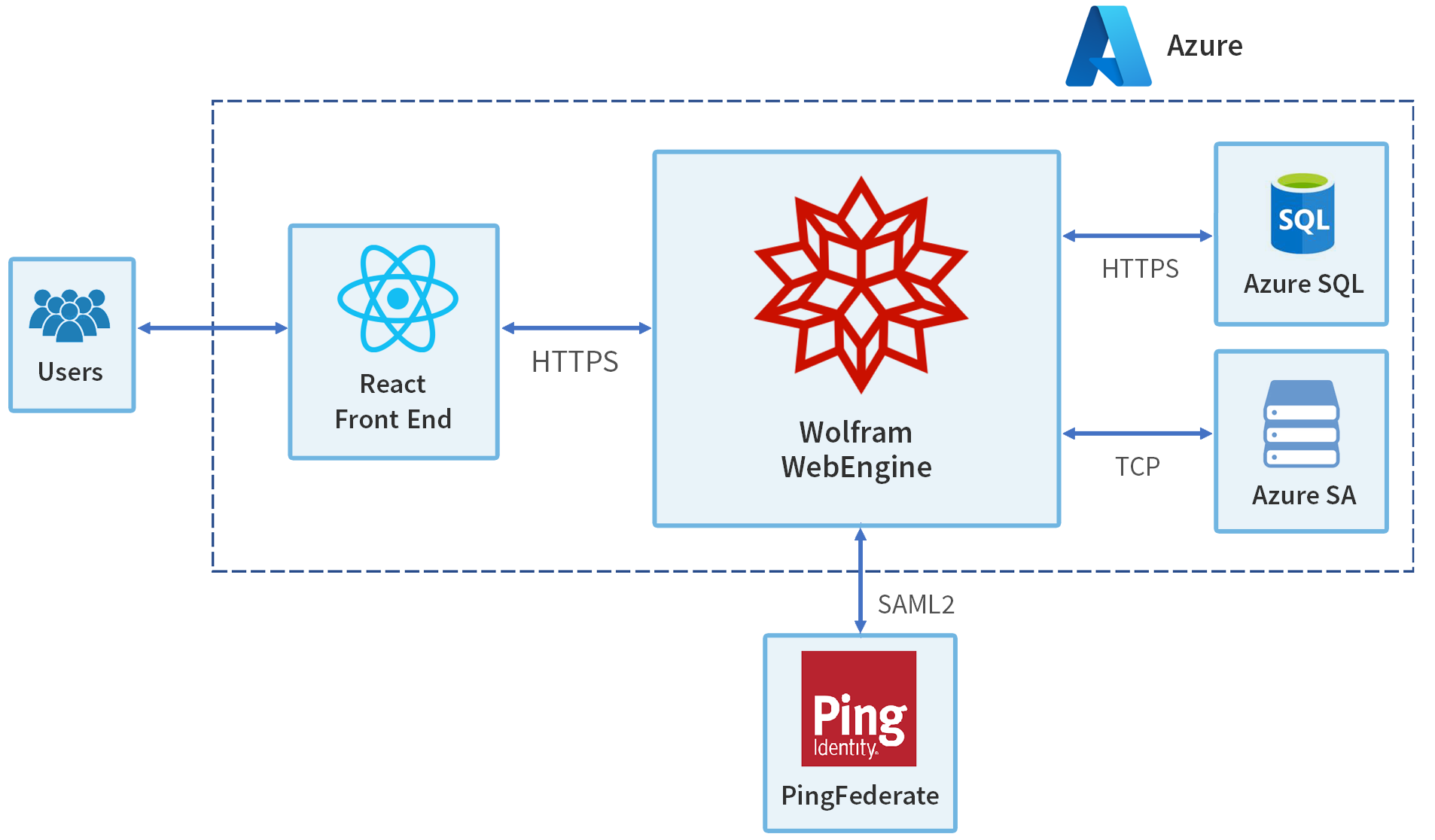
The platform architecture combined several technologies:
- Wolfram Language powering the analytical backend
- Wolfram Web Engine providing computational services
- React-based web interfaces for analysts
- Azure infrastructure for deployment within the client’s environment
The backend implemented the core analytical logic using Wolfram Language. The front end interface allowed analysts to define scenarios and run calculations through a web application. Prior to development, Wolfram also provided an updated UI and UX design that gave the client a clear view of the intended workflow and helped align implementation with project requirements.
Authentication was integrated with the client’s identity systems through PingFederate and Azure Active Directory. Analysts could access the platform using existing enterprise credentials, which helped support a smooth transition from the legacy system without disrupting user access or existing workflows.
The system was deployed within the client’s Azure cloud environment and integrated with internal services through APIs. This architecture allowed the platform to operate within the organization’s security requirements while supporting integration with other internal applications.
Modeling Risk with Scenarios and Simulation
The platform models risk through a structured scenario workflow. Analysts begin by defining potential loss events and estimating probability ranges for each outcome. A flooding incident at a retail store, for example, might include inputs representing minimum loss, most likely loss and maximum loss. Possible consequences could include damaged inventory, liability claims from customers or lost revenue during a store closure.
These estimates are converted into probability distributions and evaluated through Monte Carlo simulation. Using Wolfram Language, typical analyses run millions of iterations and finish in roughly one minute. Multiple scenarios can be aggregated to evaluate broader operational risks. Analysts can model the impact of large-scale events such as natural disasters or cybersecurity incidents across groups of facilities. The system also replaces the earlier model of isolated analysis with a collaborative environment.
Key capabilities include:
- shared scenario libraries that allow analysts to reuse existing models
- portfolio structures that organize analyses across departments
- APIs that allow simulation results to connect with other internal applications
The platform generates analytical reports using Wolfram Notebooks. These reports include interactive visualizations that allow users to explore simulation outputs directly.
Because the analytical engine is built in Wolfram Language, new computational features can be added as requirements evolve. Additional statistical methods, new data inputs or new reporting formats can be incorporated without redesigning the underlying system.
Impact and Future Applications
The platform has now been in use for roughly three years. Analysts report that risk scenarios can be prepared and evaluated far more quickly than before, because existing models can be reused and adapted rather than rebuilt from scratch. The result is a repeatable framework for quantitative risk assessment that supports collaboration across teams and connects directly with enterprise decision systems.
Projects like this illustrate how custom computational platforms can transform complex analytical workflows. Wolfram Consulting works with organizations to design systems that combine advanced computation with real operational processes. When businesses need tools for risk analysis, simulation or large-scale data modeling, Wolfram develops analytical platforms tailored to the structure of the problem and the environment in which they will be used.
Bring your analytical methodology to life in a secure, integrated platform built by Wolfram Consulting.