Optimizing Workforce Transportation for Remote Operations
Every day, remote mining operations depend on a quiet piece of logistics most people never see: moving the right people to the right place at the right time. Employees rotate in and out on fixed schedules, while limited flight availability means mine sites cannot simply pause when transportation planning falls behind.
What looks like scheduling on the surface is really a constant optimization problem. Each decision changes the next one: how many workers need transport, where they leave from, which aircraft can reach them and how to maintain staffing levels without driving flight costs higher. A small inefficiency repeated across hundreds of employees and multiple locations quickly becomes a major operational expense.
For a global mining and energy company, transportation planning across remote mining sites required more than spreadsheets and static scheduling. Working with Wolfram Consulting, the company developed an optimization system that computed cost-efficient flight assignments while preserving workforce continuity, giving planners a practical way to respond to operational constraints without turning every schedule change into a manual bottleneck.
The Cost of Manual Scheduling
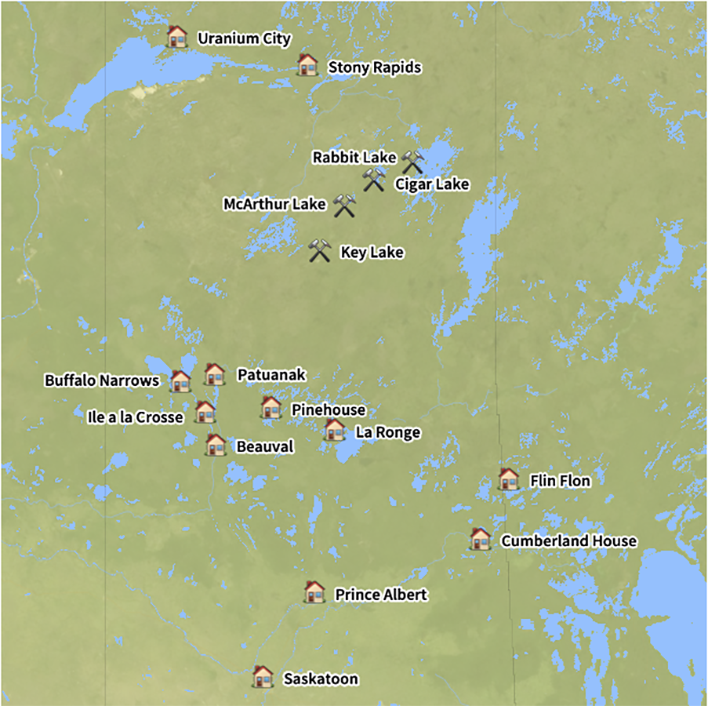
Across the company’s network, roughly 1,500 employees were spread across multiple home locations and pickup airports, working rotational schedules that required constant movement in and out of remote sites. Most followed a two-weeks-in, two-weeks-out roster, with employees arriving early in the week and returning later in the same cycle. About 90% of the workforce operated within this rotation, which meant transportation planning had to keep staffing levels stable every day, not just at the start of a schedule.
Each planning cycle required specific decisions:
- How many employees needed transport on a given day
- Which locations they should be picked up from
- Which aircraft could move them at the lowest practical cost
- How to maintain required staffing levels without unnecessary flight expense
The system had to compute those decisions across employee base locations, aircraft availability, airport constraints and staffing requirements for more than 100 positions across the mining network.
Solving the entire problem as one optimization model was not practical. A full calculation across all variables could take months or even years of continuous computation using conventional methods, making it useless for day-to-day operations. The organization needed Wolfram to replace slow manual scheduling with a system that could compute decisions fast enough to be both actionable and timely.
Building a Computable Scheduling System
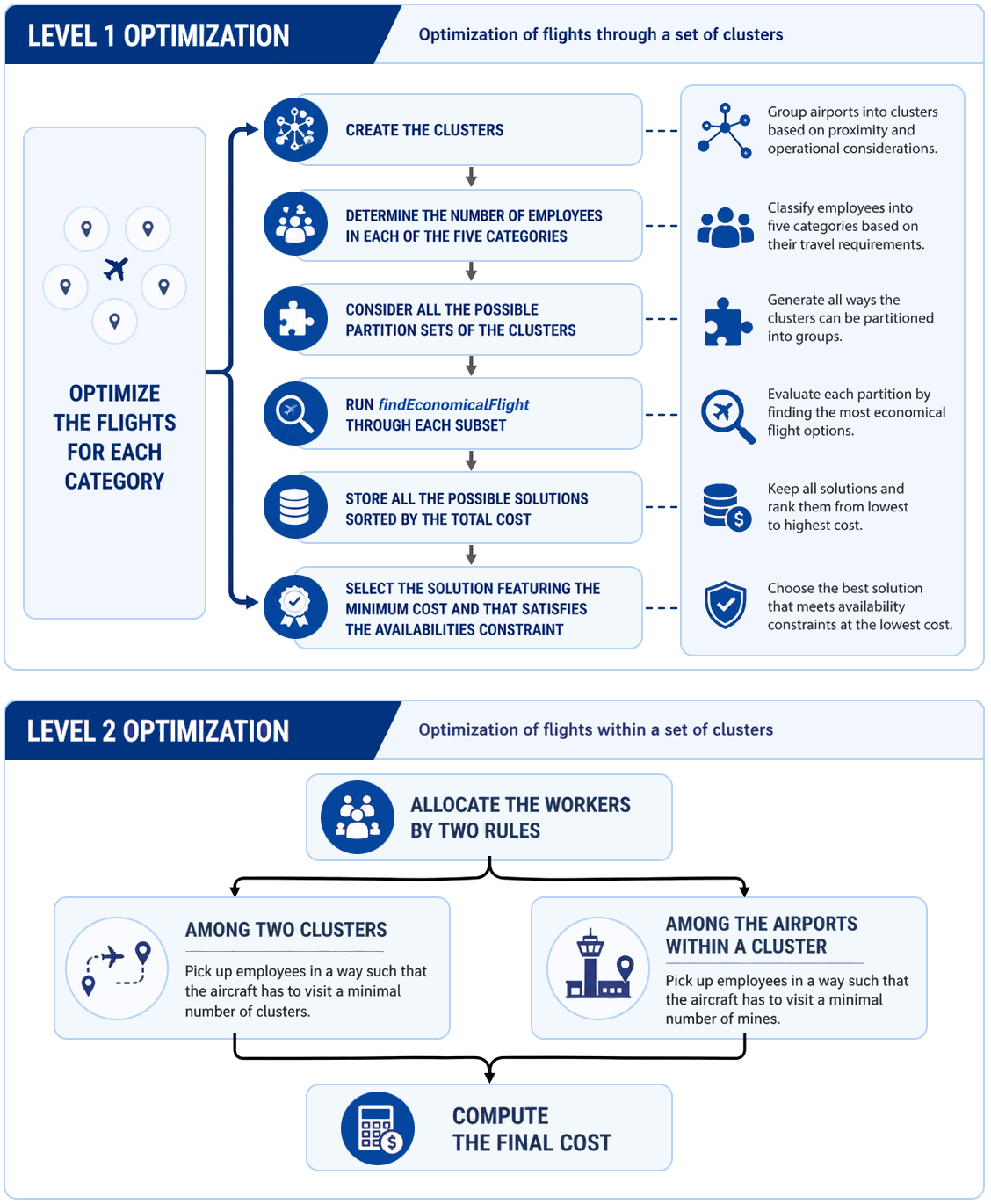
Wolfram Consulting developed a scheduling system that computed transportation plans across a two-week operating cycle, matching the workforce rotation instead of treating each day as a separate scheduling problem. Rather than relying on manual scheduling adjustments, planners could run the full rotation at once and return flight assignments that balanced cost with operational continuity.
To make the problem solvable in practice, the Wolfram team divided the model into two stages:
- Level 1 optimization: Grouped airports into clusters and identified the most economical flight patterns between those clusters, including which aircraft should be used and how many flights were required. For example, moving 34 employees from Saskatoon to the mines could produce several aircraft options ranked by cost, allowing the system to select the most economical combination instead of relying on fixed assumptions.
- Level 2 optimization: Refined those results by assigning specific employees to specific flights. The system minimized unnecessary stops by filling aircraft from the most efficient locations first and reducing extra visits between clusters and mine sites. This made the model practical for daily operations, not just long-range planning. When staffing changed or flights were disrupted, planners could rerun the model and generate updated schedules without rebuilding the entire process by hand.
Planners interact with the system through a single interface that allows them to select a scheduling scenario, import workforce data, check inputs for errors and run optimization directly. Instead of rebuilding schedules manually across disconnected tools, they could adjust constraints, rerun the model and export updated results from the same environment.
Why Wolfram
The consulting team computed schedules, ran analyses and generated reports using Wolfram Language without having to custom-code those functions from scratch. This reduced development time and made iteration faster during implementation.
That speed showed up in practical development decisions. In one case, the client needed a specific function that would have required three to four days of development time. Using native Wolfram functionality, the same result was built in about 30 minutes. That difference mattered because the client planned to keep extending the system after deployment, and faster iteration meant new features could be tested and added without long development cycles.
From model design through optimization, analysis and deployment, Wolfram Consulting built everything within Mathematica, eliminating integration overhead.
Rather than relying on conventional sequential execution, Wolfram’s built-in parallel computing framework made use of multiple processor cores to execute optimization tasks concurrently. Large optimization problems that would have required months of computation using traditional approaches were decomposed into smaller optimization problems and solved in parallel.
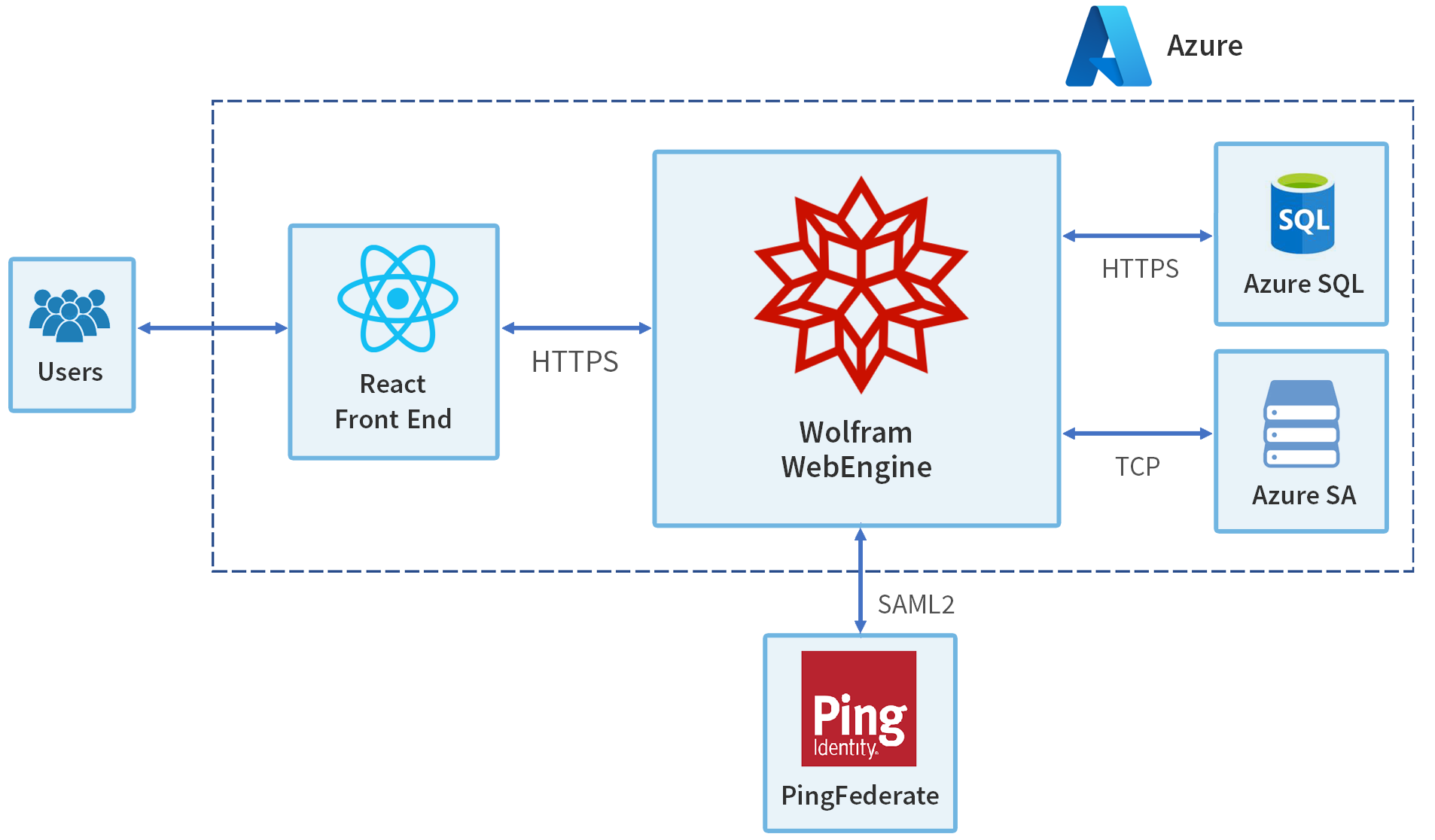
Wolfram Consulting built the back end using Wolfram Web Engine, while the front end used React and integrated with the client’s Azure-based cloud infrastructure. Authentication connected through existing enterprise systems, including PingFederate and Azure AD groups, which meant users could access the system through existing enterprise credentials instead of managing separate logins.
Mathematica’s dynamic GUI allows analysts to explore optimization landscapes and assess solutions in real time. The client continued using the system after launch and expanded development internally with ongoing support from Wolfram Consulting. This moved the system beyond a one-time implementation and into a daily operating process the client continued to build on.
Optimization Built for Real-World Operations
The challenges faced by this organization are common across many industries. Organizations with complex logistics quickly run into the same problem: too many variables, too many constraints and decisions that must be made fast enough to matter.
That is where Wolfram Language changes the equation. By combining optimization and reporting inside the same computational environment, Wolfram Consulting makes it possible to solve problems that would otherwise remain trapped in spreadsheets, disconnected tools or months of manual analysis. The result is a system planners can rerun when parameters change, inspect when decisions need justification and extend as operations grow more complex.
Turn complex workforce transportation planning into fast, cost-efficient schedules with Wolfram Consulting.